
Corporate PPAs in Germany: Structures, Guarantees of Origin and Risk Allocation
Corporate PPAs have become a central route to market for German wind and solar projects and a key tool for companies seeking stable, green electricity prices. German law has no special PPA statute, so the contract carries the full risk allocation: volume and shape, balancing, guarantees of origin, credit support, regulatory change and termination. The planned EEG reform and the EU market design rules make careful drafting more important than ever.

Key takeaways
- There is no specific PPA statute in Germany; PPAs are long-term supply or financial contracts governed by general civil law and energy regulation.
- Guarantees of origin are issued by the Federal Environment Agency only for electricity for which no EEG payment is claimed (§ 79 EEG).
- Renewable electricity may not be sold multiple times or in several forms of sale simultaneously (§ 80 EEG).
- Virtual PPAs are usually financial derivatives, which can trigger EMIR reporting and other financial regulation.
- The EEG reform bill's contracts for difference and refinancing contribution make change-in-law clauses critical.
What corporate PPAs are
A power purchase agreement (PPA) is a long-term contract for the purchase of electricity, typically from a specific renewable energy plant. Corporate PPAs are concluded between a generator – a wind or solar park operator – and a corporate buyer, such as an industrial company, a data centre operator or a retailer, or with a utility acting as intermediary. They usually run for five to fifteen years, sometimes longer, and give the generator a predictable revenue stream for financing and the buyer price certainty and a credible renewable electricity claim.
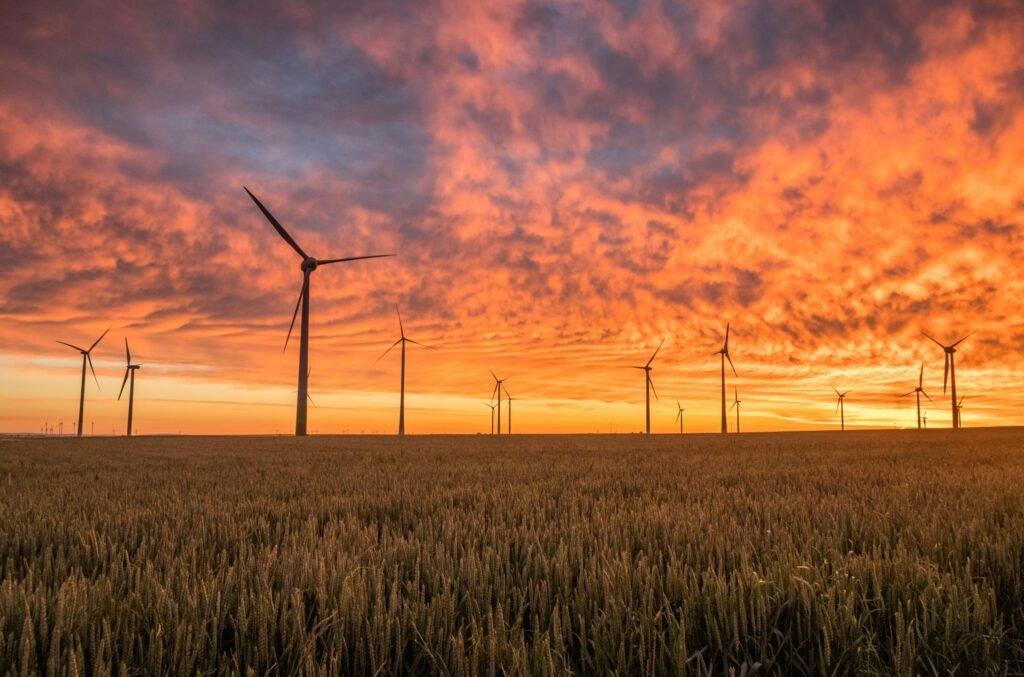
In Germany, corporate PPAs grew strongly as older plants left EEG support and as new plants were built without subsidies. They are also used alongside or instead of EEG support for new projects. German law does not regulate PPAs as a specific contract type: physical PPAs are supply contracts governed by the BGB and energy law, while virtual PPAs are financial contracts. The EU electricity market design reform encourages Member States to facilitate PPAs, including through guarantee schemes for buyers' credit risk.
This article explains the main structures, how guarantees of origin work, key contract terms and regulatory issues, including the effects of the planned EEG reform.
Physical and virtual PPAs
Physical PPAs
In a physical PPA, electricity is delivered to the buyer through the grid, usually by transfer into the buyer's balancing group. On-site PPAs, where the plant is located at the buyer's premises and supplies it directly, are a special case and can be combined with direct line or customer installation structures. Off-site physical PPAs require balancing management, because the plant's output varies while the buyer's demand follows its own profile; a utility often provides balancing and residual supply services.
Virtual (financial) PPAs
In a virtual PPA, no electricity is delivered. The generator sells its output on the wholesale market, and the parties settle the difference between an agreed strike price and the market price – a contract for difference between private parties. The buyer continues to purchase electricity from its supplier and receives guarantees of origin separately. Virtual PPAs are popular for multinational buyers with dispersed sites and for buyers whose supply contracts cannot easily accommodate physical PPA volumes. They are usually financial derivatives, which brings financial regulation into play.
| Volume structure | How it works | Risk allocation |
|---|---|---|
| Pay-as-produced | Buyer takes the actual output of the plant | Buyer bears volume and profile risk |
| Pay-as-forecasted | Buyer takes forecast volumes; deviations settled | Shared; generator bears forecast error |
| Baseload / shaped | Generator delivers a fixed profile, buying shortfalls on the market | Generator (or utility) bears shape and volume risk |
| Hybrid with storage | Storage shapes output to match demand | Depends on storage operation and contract terms |
The choice of structure determines who bears volume risk (less wind or sun than expected), profile risk (production at times of low prices), balancing costs and the risk of negative prices. Baseload PPAs are attractive for industrial buyers but expensive for generators, which must buy replacement electricity when their plant does not produce. Pay-as-produced PPAs are cheaper but shift risk to the buyer.
Guarantees of origin and double marketing
For corporate buyers, the green attribute is often as important as the price. In Germany, guarantees of origin (Herkunftsnachweise) are issued by the Federal Environment Agency, which maintains the register. Under § 79(1) EEG, guarantees of origin are issued to plant operators on application only for renewable electricity for which no payment under § 19 or § 50 EEG is claimed. Electricity supported through the EEG market premium therefore cannot carry guarantees of origin; regional guarantees of origin exist for EEG electricity sold regionally, under separate rules.
This has two practical consequences for corporate PPAs. First, a plant that wants to sell guarantees of origin to a PPA buyer must forgo EEG payments for the relevant electricity, typically by switching to "other direct marketing". Second, the prohibition on multiple marketing applies: renewable electricity may not be sold more than once, otherwise transferred or sold in several forms of sale at the same time (§ 80(1) EEG). PPA structures that combine EEG support for part of the output with PPA sales for other parts must be carefully designed and documented, and switching between forms of sale is only possible under the EEG's rules.
Define in the PPA exactly which guarantees of origin are transferred, from which plant and period, how they are cancelled in the buyer's name and what happens if the register fails to issue them. For sustainability reporting, buyers need a robust chain of evidence from plant to cancellation.
Key contract terms
- Price: fixed price, indexed price, collar or floor structures; some PPAs share upside above a cap.
- Term and start: commercial operation date, long-stop dates and remedies for delayed commissioning of new-build plants.
- Volume and shape: pay-as-produced, baseload or shaped profiles; availability guarantees; treatment of curtailment.
- Negative prices: whether the buyer pays during negative price hours or the generator must curtail.
- Balancing and scheduling: who manages balancing groups and bears imbalance costs.
- Credit support: parent guarantees, letters of credit or bank guarantees, often required by lenders; credit thresholds and rating triggers.
- Change in law: allocation of costs and benefits from changes in levies, taxes, market rules and support regimes, with renegotiation or termination rights.
- Termination: events of default, termination payments based on mark-to-market values, and assignment rights for financing banks.
Lenders to the plant will review the PPA closely and typically require direct agreements with the buyer, giving them step-in rights and notice of defaults. Buyers should therefore expect to sign additional documentation and should check the bankability requirements early.
Disputes under PPAs often arise from events that the parties did not foresee in detail: prolonged curtailment, grid connection delays, changes in market rules, or a sharp divergence between the agreed price and market prices that makes one side keen to exit. German law provides only limited relief through the doctrine of frustration of contract (§ 313 BGB), so the contract's own adjustment and termination mechanisms are decisive. Arbitration is common for international PPAs, while domestic PPAs often provide for German courts. Expert determination can resolve technical disputes about availability, curtailment or output calculations quickly.
Negotiating corporate PPAs: practical issues
Negotiations on corporate PPAs typically take months and involve procurement, energy, finance, sustainability and legal teams on the buyer's side and developers, lenders and often a utility on the seller's side. Several issues regularly cause friction.
Price and market risk
Buyers want a price below expected market levels over the term; generators want a price that supports financing. Fixed prices are common, but indexation, floors and caps, and price reopeners are used to share risk. In recent years, the increasing number of hours with very low or negative prices during sunny and windy periods has reduced the value of pay-as-produced solar PPAs, and buyers increasingly ask for shaping or storage-backed products. Generators, in turn, ask buyers to bear negative-price risk or accept curtailment in those hours.
Credit and security
Because lenders base their debt sizing on PPA revenues, they require creditworthy buyers or adequate security. Smaller buyers without an investment-grade rating may have to provide bank guarantees or parent guarantees, or accept shorter terms. Pooled structures, in which a utility aggregates several buyers, and the state-backed guarantee schemes encouraged by EU law can help mid-sized companies access corporate PPAs.
Multi-buyer and cross-border deals
Large projects are increasingly split between several buyers, each taking a share of output, which requires coordination of volumes, priorities and default consequences. Cross-border virtual PPAs, in which a buyer outside Germany contracts with a German plant, raise additional questions about governing law, tax and the recognition of guarantees of origin in the buyer's country. Clear allocation of these issues in the term sheet saves time later.
Regulatory issues: energy, financial and REMIT
Physical PPAs make the generator, or an intermediary, a supplier of electricity, with obligations under the Energy Industry Act, including notification and supplier duties when supplying household customers, and balancing group rules. Supplies to companies are less regulated, but electricity tax and levies apply depending on the structure, and on-site supply can fall under the rules for direct lines or customer installations.
Virtual PPAs are usually derivatives within the meaning of financial regulation. Under EMIR, counterparties must report derivative contracts to a trade repository, and depending on volumes, clearing or risk mitigation obligations may apply. Whether either party needs a licence under the Banking Act or MiFID depends on the nature of its activities; most corporate buyers and generators can rely on exemptions for ancillary activities or own-account dealing, but this must be checked. PPAs are also wholesale energy products within the meaning of REMIT, which can trigger reporting and market abuse obligations; our article on energy trading, REMIT and EMIR explains these rules.
Accounting can be decisive for buyers: depending on the structure, a PPA may have to be measured at fair value as a derivative under IFRS rather than accounted for as an own-use contract, which can create earnings volatility. Structures should therefore be designed with finance teams from the start.
Corporate PPAs and the EEG reform
The federal government's EEG reform bill would introduce contracts for difference for new renewable plants from 100 kW, with a refinancing contribution on excess market revenues, according to the Bundestag's summary. Plants that can finance themselves on the market are expected to be built outside the EEG.
How CfD-supported plants can combine support with corporate PPAs – and whether the refinancing contribution applies to PPA revenues – is one of the key open questions. Developers may have to choose between CfD support and PPA-based financing for each plant, and existing PPAs for plants still in development should be reviewed for change-in-law and termination rights. Our article on the EEG reform 2027 explains the bill.
The EU market design reform pushes in the same direction: it requires two-way CfDs for new direct price support and asks Member States to remove barriers to PPAs, which may lead to state-backed guarantee schemes reducing buyers' credit requirements. Buyers with strong demand for green electricity, such as data centres and energy-intensive industry, should follow these developments, because they may change both the availability and the price of PPA volumes.
How TRW & Co helps with corporate PPAs
We advise generators, corporate buyers, utilities, investors and lenders on corporate PPAs in Germany. We structure physical and virtual PPAs, draft and negotiate price, volume, balancing, credit support and change-in-law clauses, advise on guarantees of origin and EEG compatibility, assess EMIR, REMIT and licensing questions and support direct agreements with lenders. We also advise on disputes and renegotiations. Our work connects with our renewables and energy and utilities practices and our article on offshore wind tenders. Please contact us. This article is general information and not legal advice.
Frequently asked questions
Are corporate PPAs regulated by a specific law in Germany?
No. Physical PPAs are supply contracts governed by civil law and energy regulation, and virtual PPAs are financial contracts, usually derivatives. The contract therefore has to allocate all risks. The EU market design reform asks Member States to remove barriers to PPAs, which may lead to supporting measures.
Can an EEG-supported plant sell guarantees of origin under a PPA?
Not for electricity for which it claims EEG payments. Under § 79 EEG, guarantees of origin are only issued for electricity for which no payment under § 19 or § 50 EEG is claimed. Plants typically switch to other direct marketing for the PPA volumes. The prohibition on multiple marketing in § 80 EEG must also be observed.
What is the difference between pay-as-produced and baseload PPAs?
In a pay-as-produced PPA, the buyer takes the plant's actual output and bears volume and profile risk. In a baseload PPA, the generator delivers a fixed profile and must buy replacement electricity when the plant does not produce, so it bears the shape risk. Pricing reflects this allocation.
Do virtual PPAs trigger financial regulation?
Usually, yes. Virtual PPAs are generally derivatives, so EMIR reporting applies and, depending on volumes, further obligations may arise. Licensing requirements depend on the parties' activities, and exemptions are often available. PPAs are also wholesale energy products under REMIT.
How does the EEG reform affect PPAs?
The bill introduces contracts for difference with a refinancing contribution on excess revenues for new plants from 100 kW. How this interacts with PPAs is an open question. Developers may need to choose between CfD support and PPA-based financing, and existing PPAs should be reviewed for change-in-law clauses.
Sources
General information only, not legal advice. References to statutes, courts and authorities describe published law and practice at the date shown.
 Energy & Climate
Renewable Energy Project M&A in Germany: Structuring and Due Diligence
Renewable energy project M&A is one of the most active transaction segments in Germany. Wind and solar projects change hands at every stage – from early… 8 min read
 Energy & Climate
The Greenhouse Gas Quota for Fuels: Obligations, Compliance Options and Trading
The greenhouse gas quota obliges companies that place petrol and diesel on the German market to reduce the greenhouse gas emissions of their fuels by a… 8 min read
 Energy & Climate
EV Charging Infrastructure: The Legal Framework in Germany
EV charging infrastructure in Germany is governed by a mix of EU and national rules: the EU Alternative Fuels Infrastructure Regulation (AFIR) sets coverage targets and… 8 min read