
EV Charging Infrastructure: The Legal Framework in Germany
EV charging infrastructure in Germany is governed by a mix of EU and national rules: the EU Alternative Fuels Infrastructure Regulation (AFIR) sets coverage targets and payment requirements for public chargers, the Building Electromobility Infrastructure Act (GEIG) requires cabling and charging points in buildings, and tenancy and condominium law give residents the right to install wallboxes. Charge point operators, real estate owners, fleet operators and retailers need to navigate these rules, together with grid connection and energy law.

Key takeaways
- Public chargers deployed from 13 April 2024 must accept widely used payment instruments for ad hoc charging (Article 5 AFIR).
- From 1 January 2027, chargers of 50 kW or more along the TEN-T road network must accept payment cards, including older chargers.
- Along the TEN-T core network, charging pools must be located at most 60 km apart, with 400 kW by end-2025 and 600 kW by end-2027 (Article 3 AFIR).
- Non-residential buildings with more than 20 parking spaces must have at least one charging point after 1 January 2025 (§ 10 GEIG).
- Tenants and apartment owners can demand consent to install EV charging equipment (§ 554 BGB, § 20(2) WEG).
Overview of the EV charging framework
The expansion of electric mobility depends on charging infrastructure: fast chargers along motorways, public chargers in cities, workplace and retail chargers, and private wallboxes at home. EV charging is legally a supply of electricity and a service, and it touches many areas of law – EU internal market rules, energy law, building law, tenancy and condominium law, consumer protection, price indication, calibration law and data protection. The central EU instrument is the Alternative Fuels Infrastructure Regulation (Regulation (EU) 2023/1804, AFIR), which has applied since 13 April 2024 and is directly applicable in Germany.
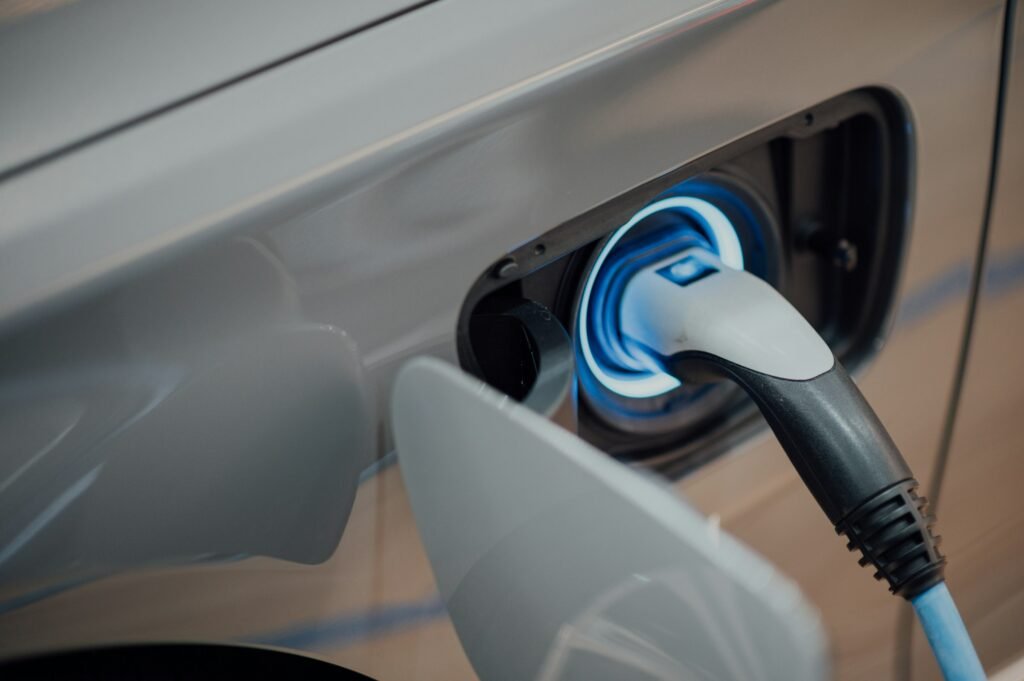
In German law, the Building Electromobility Infrastructure Act (Gebäude-Elektromobilitätsinfrastruktur-Gesetz, GEIG) implements EU building rules on charging infrastructure, the Charging Station Ordinance (Ladesäulenverordnung) contains technical and payment requirements for public chargers, and the Energy Industry Act (EnWG) treats electricity drawn by charging points as final consumption. The Civil Code and the Condominium Act give tenants and owners rights to install charging equipment.
This article gives an overview of the key requirements for operators, property owners and users, and the contractual issues in charging projects.
AFIR: coverage targets and user-friendly charging
AFIR sets binding targets for Member States. For each registered battery electric car, publicly accessible charging stations must provide at least 1.3 kW of total power output, and 0.8 kW for each plug-in hybrid (Article 3(1) AFIR).
Along the TEN-T core road network, charging pools for cars must be deployed in each direction of travel with a maximum distance of 60 km between them; by 31 December 2025 each pool must offer at least 400 kW, including at least one charger of at least 150 kW, and by 31 December 2027 at least 600 kW (Article 3(4) AFIR). Similar rules apply to the comprehensive network and to heavy-duty vehicles.
AFIR also contains direct obligations for operators. Under Article 5 AFIR, operators must allow ad hoc charging without a contract. At public charging points deployed from 13 April 2024, ad hoc charging must be possible with a widely used payment instrument, through payment card readers, contactless devices that can read payment cards, or, for chargers below 50 kW, internet-based secure payment such as QR codes.
From 1 January 2027, all public charging points of 50 kW or more along the TEN-T road network or in safe and secure parking areas, including older ones, must accept card payment. Prices must be reasonable, easily and clearly comparable, transparent and non-discriminatory.
| Rule | Who | Requirement |
|---|---|---|
| Power output targets | Member States | 1.3 kW per BEV and 0.8 kW per PHEV through public chargers |
| TEN-T core network | Member States | Pools every 60 km; 400 kW by end-2025, 600 kW by end-2027 |
| Ad hoc payment | Charge point operators | Widely used payment instruments at chargers deployed from 13 April 2024 |
| Card payment retrofit | Operators of chargers of 50 kW or more on TEN-T roads | From 1 January 2027, including older chargers |
| Price transparency | Charge point operators | Reasonable, comparable, transparent and non-discriminatory prices |
Data and smart charging
AFIR requires operators to provide static and dynamic data – location, availability, price – through national access points, and recharging points built or renovated after 13 April 2024 should support smart recharging. These requirements affect the choice of hardware and back-end software, and operators should ensure that their systems can deliver the required data reliably.
GEIG: charging infrastructure in buildings
The GEIG requires cabling (Leitungsinfrastruktur) and charging points in new and renovated buildings. Anyone constructing a residential building with more than five parking spaces inside or adjacent to the building must equip every parking space with cabling (§ 6 GEIG). For new non-residential buildings with more than six parking spaces, at least every third space must have cabling and at least one charging point must be installed (§ 7 GEIG). Major renovations of buildings with more than ten parking spaces trigger similar duties (§§ 8 and 9 GEIG).
For existing non-residential buildings, § 10 GEIG requires owners of buildings with more than 20 parking spaces inside or adjacent to the building to have installed a charging point after 1 January 2025. Owners with several such buildings can concentrate the charging points in one or more properties if this meets the demand. Companies with large property portfolios – retail chains, logistics operators, office landlords – should check compliance across their portfolio.
Upcoming EU requirements
The recast Energy Performance of Buildings Directive (EU) 2024/1275 tightens requirements for charging infrastructure and cabling in buildings, including bicycle parking. Germany must transpose it, which will lead to amendments of the GEIG. Real estate developers should plan new buildings with the stricter requirements in mind.
Rights of tenants and apartment owners
Residential and commercial tenants can demand that the landlord permit structural changes that serve the charging of electric vehicles (§ 554(1) BGB). The claim is excluded only if the change is unreasonable for the landlord even after considering the tenant's interests. The tenant may offer additional security. In practice, landlords can set conditions on installation, safety, costs and removal at the end of the lease.
In condominiums, each apartment owner can demand reasonable structural changes that serve the charging of electric vehicles (§ 20(2) WEG). The owners' meeting decides how the measure is carried out as part of proper administration, and the owner demanding the change usually bears the costs. For commercial landlords and property managers, these rights mean that charging requests must be handled systematically. A building-wide charging concept with load management is often more efficient than individual installations.
Property owners should develop a charging concept for each building, covering grid connection capacity, load management, metering and billing. This makes it easier to respond to tenants' and owners' requests and to comply with GEIG duties.
Energy law: grid connection, metering and supply
Under § 3 no. 70 EnWG, electricity drawn by charging points is treated as final consumption. The charge point operator is therefore the final consumer vis-à-vis its supplier and network operator, and the sale of charging services to EV drivers is not regulated as electricity supply to final consumers in the usual sense. This simplifies business models but means the operator bears network charges and levies on the electricity it draws.
Grid connection is often the bottleneck for fast charging hubs and depots, which need several megawatts. Network operators can take months or years to provide connections. Operators should apply early, coordinate closely with the network operator and consider battery storage to reduce peak load. Wallboxes and other controllable consumer devices are covered by § 14a EnWG: in return for reduced network charges, network operators may temporarily limit their power in case of grid congestion under rules set by the Federal Network Agency.
Calibration and price indication
Public chargers must meet calibration law requirements so that billing per kWh is accurate. Price indication rules require clear information about prices before charging begins. Non-compliant chargers risk fines and claims from competitors and consumer associations.
EV charging in commercial real estate and retail
For retailers, hotels, office landlords and car park operators, EV charging is both a legal duty and a commercial opportunity. Charging points attract customers, increase dwell time and can generate revenue. Many property owners do not want to operate chargers themselves and instead grant a charge point operator the right to install and operate them on their site in exchange for rent or a share of revenue. Others operate chargers through a subsidiary or a white-label provider. The choice affects who bears AFIR, calibration law and price indication obligations, and who is the final consumer under energy law.
Lease agreements for commercial space increasingly address EV charging: who may install chargers, who bears the costs of cabling and grid reinforcement, how electricity is metered and billed, and who must meet GEIG duties. Green lease clauses may oblige landlords to provide charging infrastructure or allow tenants to install it. For portfolio owners, a standardised approach to charging across properties reduces negotiation effort and compliance risk.
Accessibility and competition law
Public chargers must be accessible to all EV drivers on non-discriminatory terms. Exclusive arrangements between landowners and operators, for example at motorway service areas, can raise competition law questions where they foreclose access for other operators. Prices for ad hoc charging and roaming must be transparent, and pricing at public chargers has attracted the attention of competition authorities.
Contracts for EV charging projects
EV charging projects involve several types of contracts. Site agreements with landowners – retailers, petrol stations, municipalities, car park operators – must cover use of the site, duration, rent or revenue sharing, exclusivity, maintenance and removal. Hardware supply and installation contracts should cover performance, warranty and compliance with AFIR and calibration law. Back-end and roaming agreements govern the software and connections to mobility service providers. Energy supply contracts must address the high and volatile load of fast chargers.
For fleets and workplace charging, companies need policies on employee charging at work and at home, reimbursement of electricity costs, and tax treatment. Public charging infrastructure in Germany has also been supported through federal programmes, such as the tenders for the fast-charging "Deutschlandnetz", which come with procurement law requirements. Our article on battery storage projects explains how storage can complement charging hubs.
Heavy-duty vehicles and depots
Electric trucks and buses require high-power charging at depots and along major routes. AFIR contains separate targets for heavy-duty vehicles, and logistics companies are building depot chargers with several megawatts of capacity. Depot projects combine grid connection, storage, energy procurement and sometimes on-site generation, and they raise questions about permits, noise and fire safety. Contracts with vehicle manufacturers, charging hardware suppliers and energy suppliers should be coordinated so that vehicles, chargers and grid capacity are available at the same time.
Due diligence in transactions
Investors acquiring EV charging businesses or charge point operators should review site agreements, grid connections, compliance with AFIR payment and data requirements, calibration law conformity and subsidy conditions. Non-compliant chargers may need costly retrofits, particularly before the 2027 card payment deadline. Buyers should also check the remaining term of site agreements, since a charging hub without a long-term right to use its site has limited value, and whether subsidy conditions restrict a change of ownership or require continued operation for a minimum period.
How TRW & Co helps with EV charging
We advise charge point operators, real estate owners, retailers, fleet operators, utilities and investors on EV charging law. We review AFIR and GEIG compliance, draft site, hardware, back-end and energy supply contracts, advise on tenants' and owners' rights, structure grid connection and storage solutions and conduct due diligence in transactions. Our work connects with our automotive and mobility, grids and EnWG and real estate transactions teams. Please contact us. This article is general information and not legal advice.
Frequently asked questions
What payment options must public EV chargers offer?
Under Article 5 AFIR, operators must allow ad hoc charging without a contract. Chargers deployed from 13 April 2024 must accept widely used payment instruments, such as card readers or contactless devices; below 50 kW, secure internet-based payment like QR codes is also possible.
Do older fast chargers need card readers?
Yes, if they have 50 kW or more and are located along the TEN-T road network or in safe and secure parking areas. From 1 January 2027, these chargers must accept card payment, including those deployed before 13 April 2024.
Which buildings need charging points under the GEIG?
New non-residential buildings with more than six parking spaces need at least one charging point and cabling for every third space. Existing non-residential buildings with more than 20 spaces must have at least one charging point after 1 January 2025 (§ 10 GEIG).
Can tenants install a wallbox?
Tenants can demand that the landlord permits structural changes for EV charging under § 554 BGB, unless unreasonable for the landlord. Apartment owners have a similar right under § 20(2) WEG, with the owners' meeting deciding on implementation.
Who is the final consumer at a charging point?
Under § 3 no. 70 EnWG, electricity drawn by charging points counts as final consumption. The charge point operator is the final consumer towards its supplier and network operator, and bears network charges and levies.
Sources
General information only, not legal advice. References to statutes, courts and authorities describe published law and practice at the date shown.
 Energy & Climate
Renewable Energy Project M&A in Germany: Structuring and Due Diligence
Renewable energy project M&A is one of the most active transaction segments in Germany. Wind and solar projects change hands at every stage – from early… 8 min read
 Energy & Climate
The Greenhouse Gas Quota for Fuels: Obligations, Compliance Options and Trading
The greenhouse gas quota obliges companies that place petrol and diesel on the German market to reduce the greenhouse gas emissions of their fuels by a… 8 min read
 Energy & Climate
The Federal Climate Protection Act: Targets, Mechanisms and Business Impact
The Federal Climate Protection Act (KSG) sets Germany's binding climate targets: a 65% reduction in greenhouse gas emissions by 2030 and 88% by 2040 compared with… 8 min read