
The Greenhouse Gas Quota for Fuels: Obligations, Compliance Options and Trading
The greenhouse gas quota obliges companies that place petrol and diesel on the German market to reduce the greenhouse gas emissions of their fuels by a rising percentage. Under § 37a of the Federal Immission Control Act, the quota is 12% in 2026, jumps to 17.5% in 2027 and reaches 65% in 2040. Obligated parties can meet it through biofuels, renewable electricity in vehicles, renewable fuels of non-biological origin and other options, or transfer the obligation to third parties – creating a market in which EV fleet operators and charging providers also participate.
Key takeaways
- The quota rises from 12% in 2026 to 17.5% in 2027, 26.5% in 2030, 41% in 2035 and 65% in 2040 (§ 37a(4) BImSchG).
- Obligated parties are the taxpayers under the Energy Tax Act for petrol and diesel (§ 37a(3) BImSchG).
- Compliance options include biofuels, electricity used in road vehicles, renewable fuels of non-biological origin and, from 2027, recycled carbon fuels (§ 37a(5) BImSchG).
- Obligations can be transferred to third parties by written contract (§ 37a(6) BImSchG).
- Shortfalls trigger a levy of EUR 0.60 per kilogram of CO2 equivalent (§ 37c(2) BImSchG).
What is the greenhouse gas quota?
Road transport is one of the sectors where Germany's emissions have fallen most slowly. Alongside carbon pricing under national fuel emissions trading, the main instrument for decarbonising fuels is the greenhouse gas quota (Treibhausgasminderungsquote, THG-Quote) in §§ 37a to 37h of the Federal Immission Control Act (Bundes-Immissionsschutzgesetz, BImSchG). It does not set a blending share for biofuels as such, but requires a reduction in the greenhouse gas emissions of the total fuel placed on the market compared with a fossil reference value. Obligated companies can choose how to achieve the reduction.

Under § 37a(1) BImSchG, anyone who commercially places petrol or diesel subject to energy tax on the market must ensure that the reduction requirements are met for the total quantity placed on the market in a calendar year. The obligated party is the energy taxpayer, typically the operator of a tax warehouse such as a refinery or fuel depot (§ 37a(3) BImSchG). The consolidated text shows that the BImSchG was amended several times in 2026, and the quota path set out below reflects the current version.
This article explains the quota path, the compliance options, quota trading, the role of electric vehicles and the consequences of non-compliance.
The greenhouse gas quota path to 2040
The required reduction percentage rises steeply. Under § 37a(4) BImSchG, it was 6% from 2020, 7% from 2022, 8% from 2023, 9.35% from 2024 and 10.6% from 2025. It is 12% from 2026, then 17.5% from 2027, 19.5% from 2028, 22.5% from 2029, 26.5% from 2030, 30% from 2031, 33% from 2032, 36% from 2033, 38% from 2034 and 41% from 2035. From 2036 the increase accelerates further: 46% in 2036, 51% in 2037, 56% in 2038, 61% in 2039 and 65% from 2040.
The reference value is calculated by multiplying a base value set by ordinance with the energy quantity of fossil fuels and compliance options placed on the market. The emissions of fossil fuels are calculated using default values, and those of biofuels using the values in recognised sustainability certificates. Biofuels without recognised certificates are treated as fossil fuels.
| Year | Required reduction |
|---|---|
| 2025 | 10.6% |
| 2026 | 12% |
| 2027 | 17.5% |
| 2030 | 26.5% |
| 2035 | 41% |
| 2040 | 65% |
EU background
The quota implements the transport provisions of the EU Renewable Energy Directive, as revised by Directive (EU) 2023/2413 (RED III), which sets higher targets for renewable energy in transport by 2030, including sub-targets for advanced biofuels and renewable fuels of non-biological origin. Germany's quota goes beyond the 2030 horizon and sets a long-term path to 2040.
Compliance options
Obligated parties can meet the greenhouse gas quota through several compliance options listed in § 37a(5) BImSchG:
- biofuels blended into petrol or diesel, or placed on the market in pure form;
- biomethane and other biofuels in natural gas fuel;
- electricity used in road vehicles, where an ordinance permits it and the electricity has been properly measured and monitored;
- liquid or gaseous renewable fuels of non-biological origin, including those co-processed in refineries, where an ordinance permits;
- from 2031, low-carbon electrolytic hydrogen used as an intermediate product, and from 2027, recycled carbon fuels, where an ordinance permits.
Upstream emission reductions in oil production could be counted only until the 2026 obligation year. Detailed rules – for example caps on biofuels from food and feed crops, the phase-out of certain feedstocks, minimum shares of advanced biofuels and multipliers for certain options – are set out in ordinances under § 37d BImSchG, particularly the 38th BImSchV. These ordinances change frequently and determine the economic value of each option.
Sustainability certification
Biofuels count only if they meet the sustainability criteria of the Biofuel Sustainability Ordinance and are covered by recognised certificates. Fraud cases involving falsely declared advanced biofuels have led to stricter controls. Obligated parties and traders should conduct careful due diligence on suppliers, production sites and certification schemes.
Transfer and trading
Under § 37a(6) BImSchG, the fulfilment of obligations can be transferred by written contract to a third party that is not itself obligated. The contract must specify the quantity of the obligation assumed, the compliance options concerned and the greenhouse gas emissions in kilograms of CO2 equivalent. The third party can fulfil the contract only with compliance options it used in the obligation year, with limited exceptions for the previous year.
This creates a market for greenhouse gas quotas. Biofuel producers, operators of public charging points, fleet operators and intermediaries sell quota quantities to obligated parties. Prices fluctuate with the quota level, the availability of compliance options and regulatory changes. The steep increase from 12% to 17.5% in 2027 is expected to raise demand for compliance options significantly.
Quota transfer contracts must be in written form and contain the statutory information. Missing details can make the transfer ineffective, leaving the obligated party exposed to the levy. Use standardised templates, check counterparties' ability to deliver and keep the signed originals.
Electric vehicles and charging points
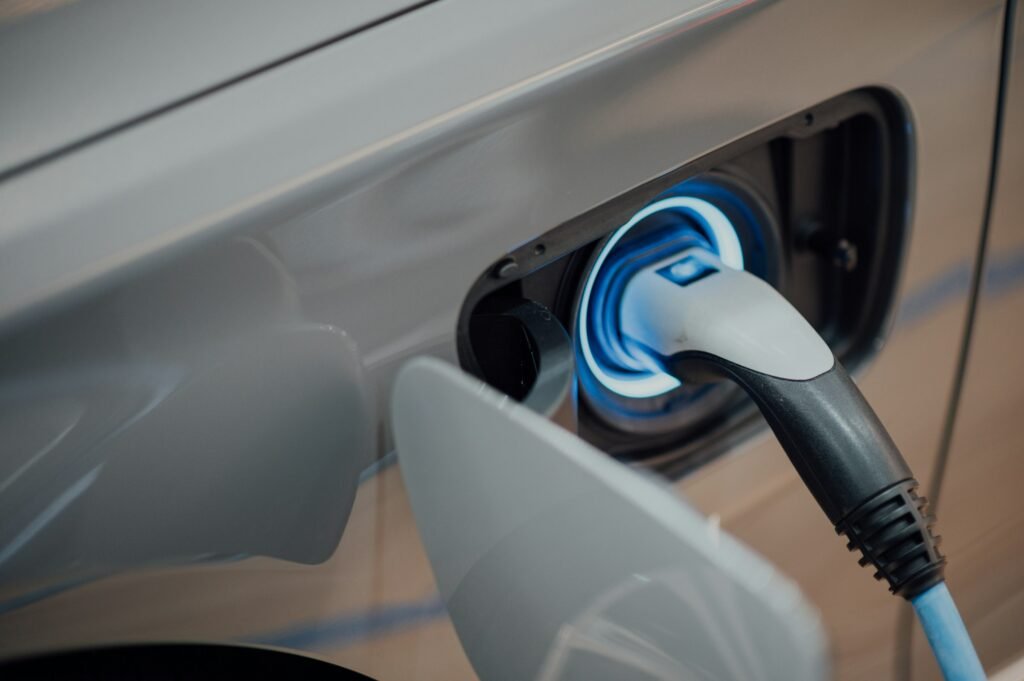
Electricity used in road vehicles counts as a compliance option under conditions set by ordinance. This allows owners of electric vehicles and operators of public charging points to generate quota quantities and sell them, usually through intermediaries that bundle volumes and sell them to obligated parties. For fleet operators and charge point operators, the greenhouse gas quota has become a relevant revenue stream that improves the economics of electrification.
The amounts depend on the quota price, the energy quantity credited per vehicle or charging point and any multipliers. Regulatory changes can reduce these revenues, so business plans should not rely on current prices. Charge point operators must meet measurement and documentation requirements. Our article on EV charging infrastructure law covers the wider framework for charging.
Hydrogen and e-fuels
Renewable hydrogen used in refineries or in fuel cell vehicles, and synthetic fuels produced from renewable electricity, can count towards the quota under the conditions of the implementing ordinance. These options are currently expensive, but the steep quota path and EU sub-targets are designed to create demand and to support the first commercial production plants in Germany and abroad. Projects should verify that their hydrogen meets the EU criteria for renewable fuels of non-biological origin.
Enforcement and penalties
Obligated parties must report the quantities and compliance options to the competent authority. If they do not meet the obligation, the authority sets a levy for the shortfall (§ 37c(2) BImSchG). The levy is EUR 0.60 per kilogram of CO2 equivalent for the general reduction obligation, and EUR 45 or EUR 120 per gigajoule for shortfalls in mandatory minimum shares for certain biofuels or renewable fuels set by ordinance. The levy becomes due at the end of 1 June of the year following the obligation year.
Because the levy is high compared with typical quota prices, compliance is usually cheaper than paying. However, shortfalls can arise from errors in reporting, invalid certificates or failed transfer contracts. Obligated parties should maintain robust internal controls and contractual protection against counterparty failures. Levy decisions can be challenged by objection and in court, but the burden of proving that compliance options were validly used generally lies with the obligated party, so complete documentation of quantities, certificates and contracts is essential.
Disputes about quota contracts
Disputes often arise when a seller cannot deliver contracted quota quantities, when certificates turn out to be invalid, or when regulatory changes alter the value of a compliance option during the term of a contract. Contracts should define delivery obligations precisely, allocate the risk of regulatory change, provide for replacement deliveries or compensation, and set out how the levy risk is shared. Because obligations relate to a specific obligation year, timing provisions are critical: a delivery after the relevant deadline may be worthless to the buyer.
Interaction with carbon pricing
The quota operates alongside national fuel emissions trading and, from 2028, the EU emissions trading system for buildings and road transport. Biofuels and renewable fuels reduce the carbon price burden as well as counting towards the quota. Our article on EU ETS 2 and fuel emissions trading explains the carbon price side.
Aviation, shipping and other sectors
The greenhouse gas quota covers petrol and diesel for road transport. Aviation and maritime transport are governed by separate EU rules: the ReFuelEU Aviation Regulation requires fuel suppliers at EU airports to supply rising minimum shares of sustainable aviation fuels, and the FuelEU Maritime Regulation limits the greenhouse gas intensity of energy used on board ships. Companies active in several transport modes should coordinate their compliance strategies, since the same feedstocks and fuels may be in demand across sectors and their value can differ.
Heavy-duty road transport is a particular focus. Trucks and buses consume large volumes of diesel, and switching to renewable diesel, biomethane, electricity or hydrogen generates compliance options. Logistics companies and public transport operators can use quota revenues to finance fleet conversion, while fuel suppliers may offer renewable fuels to these customers under long-term contracts.
Due diligence on counterparties
Because the market involves many intermediaries, obligated parties should check counterparties' track record, financial strength and certification. Contracts with intermediaries that bundle quota quantities from many electric vehicles should include warranties on the eligibility and proper registration of the underlying quantities.
Contracts and strategy
For fuel suppliers, the rising quota requires long-term procurement strategies for biofuels, renewable fuels and quota quantities. Offtake agreements with biofuel and e-fuel producers, quota purchase agreements and hedging arrangements need clauses on regulatory change, certification, delivery shortfalls and pricing. For producers of renewable fuels and for charging businesses, long-term quota sales contracts can underpin financing.
Investors in biofuel plants, biomethane, hydrogen and charging infrastructure should model quota revenues under different regulatory scenarios. Lenders will typically apply conservative assumptions, since quota prices have fluctuated strongly in the past in response to fraud cases, changes in ordinances and the availability of imported biofuels, and they may require minimum price arrangements or long-term offtake contracts before financing a project. Transport and logistics companies can use the quota to reduce the cost of electric or hydrogen vehicles. Our overview of automotive and mobility covers related topics.
How TRW & Co helps with the greenhouse gas quota
We advise fuel suppliers, biofuel and renewable fuel producers, charge point operators, fleet operators and investors on the greenhouse gas quota. We review compliance obligations and options, draft quota transfer, offtake and supply contracts, advise on certification and fraud risks, structure investments in renewable fuels and charging, and represent clients in proceedings concerning levies and reporting. Our work connects with our automotive and mobility, energy and utilities and compliance and ESG teams. Please contact us. This article is general information and not legal advice.
Frequently asked questions
How high is the greenhouse gas quota?
Under § 37a(4) BImSchG, the required reduction is 12% in 2026, 17.5% in 2027, 26.5% in 2030, 41% in 2035 and 65% from 2040, compared with a fossil reference value for the fuels placed on the market.
Who is obligated?
Companies that commercially place taxable petrol or diesel on the market; the obligated party is the taxpayer under the Energy Tax Act, typically the operator of a tax warehouse (§ 37a(1), (3) BImSchG).
How can the quota be met?
Through biofuels, biomethane, electricity used in road vehicles, renewable fuels of non-biological origin and, from 2027, recycled carbon fuels, subject to ordinances. Obligations can also be transferred to third parties by written contract.
Can EV owners and charge point operators earn quota revenue?
Yes. Electricity used in road vehicles counts as a compliance option under ordinance conditions. Vehicle owners and charge point operators can sell quota quantities, usually through intermediaries, to obligated fuel suppliers.
What happens if the quota is missed?
The authority sets a levy for the shortfall: EUR 0.60 per kilogram of CO2 equivalent for the general obligation, and EUR 45 or 120 per gigajoule for shortfalls in mandatory minimum shares (§ 37c(2) BImSchG).
Sources
General information only, not legal advice. References to statutes, courts and authorities describe published law and practice at the date shown.
 Energy & Climate
Renewable Energy Project M&A in Germany: Structuring and Due Diligence
Renewable energy project M&A is one of the most active transaction segments in Germany. Wind and solar projects change hands at every stage – from early… 8 min read
 Energy & Climate
EV Charging Infrastructure: The Legal Framework in Germany
EV charging infrastructure in Germany is governed by a mix of EU and national rules: the EU Alternative Fuels Infrastructure Regulation (AFIR) sets coverage targets and… 8 min read
 Energy & Climate
The Federal Climate Protection Act: Targets, Mechanisms and Business Impact
The Federal Climate Protection Act (KSG) sets Germany's binding climate targets: a 65% reduction in greenhouse gas emissions by 2030 and 88% by 2040 compared with… 8 min read