
Guide · Energy and Infrastructure
Energy Grids and the EnWG
Energy grids decide whether many projects in Germany's energy transition can go ahead at all. This guide explains grid regulation under the EnWG and by the Federal Network Agency, connection procedures and capacity allocation, network charges and their reform, unbundling, concessions, storage, customer installations and district heating.
Key takeaways
- Network operators must connect customers, generators and storage on appropriate, non-discriminatory terms (§ 17 EnWG).
- Capacity shortages led to maturity-based allocation for storage and large consumers in 2026.
- The Federal Network Agency sets network charge methodologies; a new framework is planned from 2029.
- Qualifying storage commissioned by 4 August 2029 is exempt from network charges for 20 years.
- Municipal concession contracts for local networks may run for at most 20 years (§ 46 EnWG).
Energy grids in Germany at a glance
Energy grids in Germany are regulated monopolies. Whoever operates an electricity or gas network of general supply must connect customers, generators and storage on appropriate and non-discriminatory terms, grant third-party access, keep the network business independent from generation and supply, and earn revenues only within limits set by the regulator.
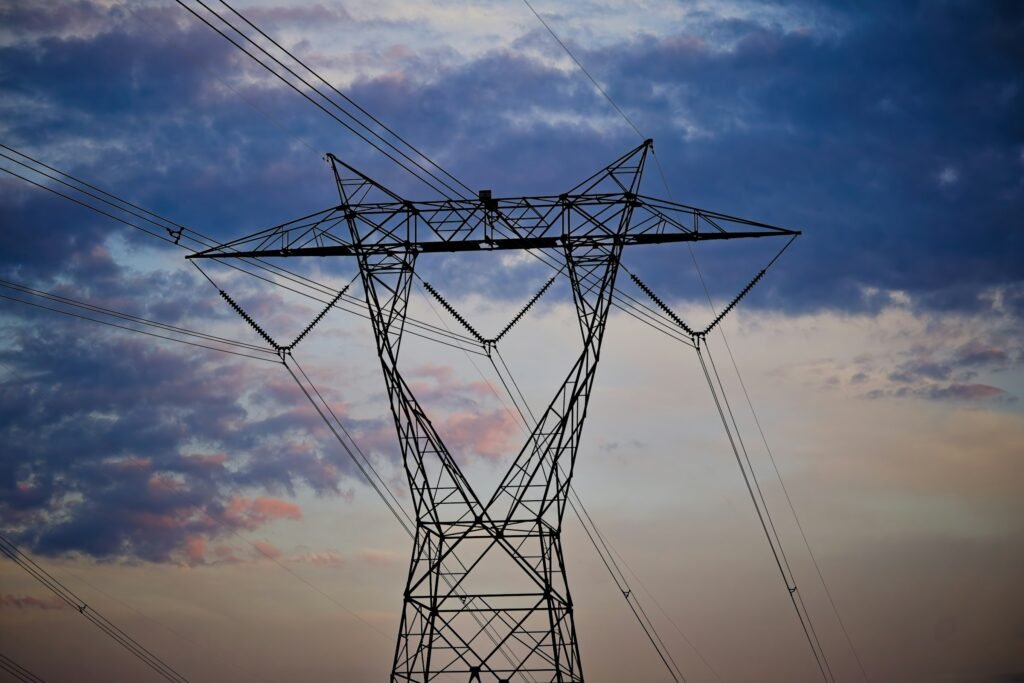
The legal basis is the Energy Industry Act (Energiewirtschaftsgesetz, EnWG), supplemented by ordinances and, increasingly, by determinations (Festlegungen) of the Federal Network Agency (Bundesnetzagentur, BNetzA) and the state regulators. For investors, industrial users, developers and municipal utilities, the grid has become the bottleneck of the energy transition: connection capacity, connection costs and network charges now decide whether many projects are viable.
This page explains how grid regulation works, how grid connection procedures run in practice, how network charges are set and reformed, what unbundling means for integrated groups and municipal utilities, and which alternatives to the public grid exist, from customer installations to district heating networks. It complements our overview of energy and infrastructure law and our page on renewable energy and the EEG.
| Topic | Key provision | What it means in practice |
|---|---|---|
| Grid connection | § 17 EnWG | Duty to connect on appropriate, non-discriminatory, transparent terms; refusal only with reasons |
| Network operation and expansion | § 11 EnWG | Secure, reliable network; expansion where economically reasonable |
| Unbundling | §§ 6–10e EnWG | Legal and operational separation; de minimis exemption below 100,000 connected customers (§ 7(2)) |
| Revenue regulation | § 21a EnWG | Incentive regulation with revenue caps and efficiency targets |
| Controllable consumer devices | § 14a EnWG | Grid-oriented control of heat pumps, wallboxes and similar devices in return for reduced charges |
| Concession contracts | § 46 EnWG | Municipal road-use contracts for local networks; term of at most 20 years |
| Storage | § 11c, § 118(6) EnWG | Overriding public interest; 20-year exemption from network charges for qualifying storage |
Regulators and the regulatory framework
The Federal Network Agency regulates transmission system operators and larger distribution system operators; state regulatory authorities are responsible for smaller distribution networks within their territory unless they have delegated the task. Since the CJEU held that Germany had not given its regulator sufficient independence (CJEU, judgment of 2 September 2021, Commission v Germany, C-718/18), the legislator has moved much of the detailed rule-making from ministerial ordinances to the regulator. The Federal Network Agency now sets methodologies for network charges, incentive regulation and connection procedures through determinations, often after public consultation.
Decisions of the regulator can be challenged by way of appeal (Beschwerde), which may be based on new facts and evidence (§ 75 EnWG). The appeal is decided exclusively by the Higher Regional Court competent for the regulator's seat, which for the Federal Network Agency is the Higher Regional Court of Düsseldorf; a further appeal on points of law lies to the Federal Court of Justice. Because determinations bind all operators, participating in consultations is often more effective than litigating afterwards.
For market participants, the shift from ordinances to determinations has practical consequences. Rules on network charges, connection procedures, balancing and metering can now change more quickly and with shorter transition periods than before. Companies whose business model depends on a particular charge exemption or connection model should monitor the Federal Network Agency's consultation pipeline and build regulatory change clauses into long-term contracts with customers, lenders and offtakers.
Network operators and their duties
Operators of energy supply networks must operate, maintain and develop a secure, reliable and efficient network without discrimination and must optimise, strengthen and expand it as needed, so far as this is economically reasonable (§ 11(1) EnWG). The statute now expressly requires them to consider the needs of transport, heat, industry and electricity that arise from the goal of greenhouse gas neutrality. The four transmission system operators prepare network development plans, while distribution system operators must plan their own network expansion, increasingly on a regional basis.
Grid connection procedures for energy grids
Connection to energy grids is governed by § 17 EnWG. Operators must connect final consumers, downstream networks, charging points for electric vehicles, generation plants, gas storage, biogas upgrading facilities and electricity storage on technical and economic terms that are appropriate, non-discriminatory and transparent, and no less favourable than those applied within their own group. An operator may refuse a connection only if it proves that connection is impossible or unreasonable for operational or economic reasons, and must give reasons in writing. Renewable installations additionally benefit from connection priority under the Renewable Energy Sources Act, though not as against energy storage facilities.
In practice, the bottleneck is capacity. Transmission system operators have received connection requests for large batteries and data centres far exceeding available capacity. In 2026, they moved away from the first-come-first-served principle for storage and large consumers towards a procedure that ranks projects by maturity, and the Federal Government adopted a grid connection package together with its EEG 2027 bill in July 2026. Flexible connection agreements allow operators to limit the connection capacity statically or dynamically in exchange for an earlier connection, which can make projects viable that would otherwise wait for years. Our insight on grid connection reform explains these procedures in detail.
What to secure before investing
Developers and large consumers should obtain a written connection commitment or at least a documented reservation, with clear statements on connection point, capacity, timing and cost contributions (Baukostenzuschuss). They should check whether the reservation lapses if milestones are missed and how a flexible connection affects revenue. Lenders will ask for exactly these documents, and acquirers of project rights should review them in due diligence. Our insight on battery storage projects covers storage-specific issues.
A connection request is not a connection right. Before committing capital to projects that depend on energy grids, map the network operator's procedure, document every reservation and deadline, and align the financing conditions, construction contracts and offtake agreements with the realistic connection date. Changes to allocation procedures in 2026 mean that older reservations should be re-checked against the current rules.
Network charges and incentive regulation
Network users pay charges for access to energy grids. Operators' allowed revenues are set by incentive regulation, which imposes revenue caps for multi-year regulatory periods, distinguishes between controllable and non-controllable costs and sets individual efficiency targets (§ 21a EnWG). Charges are then derived from the allowed revenues according to the rules for each voltage level. Disputes over the cost base, the equity return and efficiency benchmarking regularly go to the Higher Regional Court of Düsseldorf and the Federal Court of Justice.
The system is being rebuilt. The Electricity Network Charges Ordinance expires at the end of 2028, and the Federal Network Agency is preparing a new framework (the AgNes process) to replace it from 2029. Its final draft, consulted in autumn 2026, would replace the demand charge for larger consumers with a capacity price, introduce a capacity-based charge for new generators and storage facilities and extend band-load special charges for existing industrial customers for a transitional period. Our insight on network charges reform summarises the proposals. Until the new framework is adopted, its details should be treated as proposals.
Reduced charges and exemptions
Several exemptions shape the economics of projects. Electricity storage facilities that meet the statutory conditions and are commissioned by 4 August 2029 are exempt from network charges on the electricity they take for storage for 20 years from commissioning (§ 118(6) EnWG). Heat pumps, wallboxes and other controllable consumer devices can be connected under the Federal Network Agency's rules for grid-oriented control in return for reduced charges (§ 14a EnWG). Industrial band-load and atypical users can apply for individual network charges where they meet usage criteria. Each exemption has conditions that must be monitored over time, because losing it can retroactively increase costs.
Unbundling, concessions and municipal utilities
Vertically integrated companies must ensure that their network operators are independent from generation and supply (§ 6 EnWG). Distribution system operators must be legally separate and operationally independent, with separate management, decision-making powers and branding. A de minimis exemption applies to vertically integrated undertakings with fewer than 100,000 customers connected to their distribution network (§ 7(2) EnWG), which covers many municipal utilities (Stadtwerke). Electricity distribution system operators may in principle not own, build or operate energy storage facilities themselves. Transmission system operators are subject to stricter ownership unbundling or independent transmission operator models.
Local electricity and gas distribution networks run on public roads under concession contracts with municipalities. Municipalities must make their roads available without discrimination and may conclude such contracts for a maximum of 20 years (§ 46 EnWG). When a concession expires, the municipality must award it in a transparent, non-discriminatory procedure, and the previous operator must transfer the network against appropriate compensation. Concession awards are frequently litigated, and the valuation of the network transferred is a recurring dispute. Our page on energy and utilities covers municipal utilities more broadly.
Customer installations, closed distribution systems and district heating
Not every network is part of the regulated public grid. Customer installations on a single site, such as industrial parks, shopping centres or residential quarters, can be exempt from network regulation if they meet the statutory definition, including the requirement that they are insignificant for competition.
After the CJEU held in November 2024 that the German criteria were too broad (C-293/23), the legal position of many installations had to be reconsidered; a transitional rule postpones the application of network regulation for existing installations. Closed distribution systems on industrial sites (§ 110 EnWG), shared building supply (§ 42b EnWG) and energy sharing (§ 42c EnWG) are alternatives. Our insight on direct lines and customer installations explains the options.
District heating networks are not regulated like electricity and gas grids, but supply relationships are governed by the Ordinance on General Conditions for the Supply of District Heating (AVBFernwärmeV), which requires transparent price adjustment clauses that reflect both cost development and the heat market. Heat networks must increasingly use renewable energy or waste heat under the Heat Planning Act, and municipal heat plans determine where networks will be expanded. Price clauses have been the subject of extensive litigation; see our insights on district heating price clauses and municipal heat planning.
Hydrogen, storage and the future of energy grids
Gas networks face decline as heating and industry electrify, while a separate regulatory regime for hydrogen networks is emerging. The Federal Network Agency approved the hydrogen core network in October 2024, and hydrogen network operators must grant connection and access on reasonable and non-discriminatory terms. The EU hydrogen and decarbonised gas package will require further changes to network planning, unbundling and the decommissioning of gas networks, and gas distribution system operators must prepare transformation plans for parts of their networks. See our page on hydrogen, CO2 storage and decarbonisation.
Electricity storage facilities are in the overriding public interest (§ 11c EnWG), which strengthens them in permitting and planning decisions. The same statutory weighting helps grid expansion itself: transmission projects in the federal requirement plans are treated as being in the overriding public interest, and planning approval procedures for lines and substations have been streamlined in recent years, although objections from landowners and municipalities remain common.
Combined with the network charge exemption and the reform of connection procedures, this has made batteries one of the most dynamic asset classes connected to energy grids. Data centres and electrified industry are the other main drivers of connection requests, and they often negotiate connection capacity, cost contributions and supply terms years before operation starts.
Transactions and disputes involving energy grids
Network assets attract long-term infrastructure investors because regulated revenues are predictable. Acquisitions of stakes in transmission or distribution operators, municipal utility partnerships and sales of local networks after a concession change all require a regulatory analysis alongside the usual corporate due diligence. Buyers should examine the revenue cap and its components, the outcome of the last efficiency benchmarking, pending regulatory proceedings, concession terms and expiry dates, and the operator's compliance with unbundling. Acquisitions of grid operators by investors from outside the EU can trigger investment screening, because energy networks are critical infrastructure; see our page on foreign investment control.
Disputes typically concern connection refusals and delays, the allocation of connection costs, the calculation of network charges, the classification of customer installations, concession awards and network transfer prices. Some are decided by the Federal Network Agency in abuse proceedings, others by the civil courts. Choosing the forum matters: regulatory abuse proceedings can be quicker and cheaper, while civil claims allow damages and repayment of excess charges. Limitation periods and the duty to object to invoices should be checked early, because network charge repayment claims are often time-barred if raised too late.
Contracts with network operators
The main contracts are the grid connection agreement, the connection use agreement and, for suppliers and traders, the network usage and balancing group agreements, many of which follow standard forms set or approved by the Federal Network Agency. Negotiating room is limited, but connection agreements for large projects usually contain individual terms on timing, capacity, cost contributions and operational restrictions. These terms should be read together with the project's financing and offtake documents.
How TRW & Co helps
We advise developers, storage and data centre investors, industrial consumers, municipal utilities and network operators on energy grids in Germany. We review and negotiate grid connection agreements, reservations and flexible connection terms, assess network charge exemptions and special charges, structure customer installations and closed distribution systems, and advise on unbundling and concession procedures. We support participation in Federal Network Agency consultations and represent clients in regulatory proceedings and appeals, and we conduct regulatory due diligence on grid-dependent assets. To discuss your project, please contact us. This page provides general information, not legal advice.
Frequently asked questions
Can a German network operator refuse to connect my project?
Only in limited cases. Under § 17 EnWG, operators must connect customers, generators and storage on appropriate, non-discriminatory and transparent terms. They may refuse only if connection is impossible or unreasonable for operational or economic reasons, for example lack of capacity, and must give written reasons. In practice, capacity shortages are common, so the procedure, timing and any flexible connection offer matter more than the abstract right.
Who regulates energy grids in Germany?
The Federal Network Agency regulates the transmission system operators and larger distribution networks; state regulators are responsible for smaller distribution networks in their territory unless they have delegated this task. Since the CJEU's 2021 judgment on regulatory independence (C-718/18), the Federal Network Agency sets many methodologies through determinations. Its decisions can be appealed to the Higher Regional Court of Düsseldorf, with a further appeal to the Federal Court of Justice.
Do battery storage facilities pay network charges?
Storage facilities meeting the conditions of § 118(6) EnWG and commissioned by 4 August 2029 are exempt from network charges on the electricity they take for storage, for 20 years from commissioning. Other charges and levies may still apply, and the new network charges framework being prepared by the Federal Network Agency proposes capacity-based charges for new generators and storage. Investors should model both the current exemption and the proposed changes.
What is the de minimis exemption from unbundling?
Vertically integrated undertakings with fewer than 100,000 customers directly or indirectly connected to their electricity or gas distribution network are exempt from the legal and operational unbundling duties (§ 7(2) and § 7a EnWG). Many municipal utilities rely on this. Accounting unbundling, confidentiality and non-discrimination duties still apply, so exempt utilities need internal processes to treat third parties fairly.
How long can a municipal concession contract last?
Contracts between municipalities and energy companies for the use of public roads for local distribution networks may be concluded for a maximum of 20 years (§ 46(2) EnWG). When a concession expires, the municipality must award it in a transparent and non-discriminatory procedure, and the previous operator must transfer the network assets to the new concessionaire against appropriate compensation.
Sources
General information only, not legal advice. References to statutes, courts and authorities describe published law and practice at the date shown.