
Declining-Balance Depreciation for New Investment
Declining balance depreciation is available again in Germany for movable fixed assets acquired between 1 July 2025 and 31 December 2027, at up to three times the straight-line rate and no more than 30%. Electric vehicles can be written off 75% in the first year. This guide explains the rules, qualifying assets and how to time investments before the corporate tax cut.

Key takeaways
- § 7(2) EStG allows declining balance depreciation for movable assets acquired from July 2025 to December 2027.
- The rate is up to three times the straight-line rate, capped at 30% of book value.
- Electric vehicles acquired in the window can be depreciated 75% in the first year (§ 7(2a) EStG).
- Buildings, intangible assets and current assets do not qualify.
- Deductions before the 2028 rate cut reduce tax at 15% rather than 10%.
Declining balance depreciation in Germany: what the 2025 programme allows
Declining balance depreciation is back in German tax law for a limited period. Under § 7(2) of the Income Tax Act (EStG), businesses may depreciate movable fixed assets acquired or produced after 30 June 2025 and before 1 January 2028 using a declining-balance method instead of straight-line depreciation. The rate may be up to three times the straight-line rate, capped at 30% of the remaining book value each year.
In addition, § 7(2a) EStG introduced a special accelerated schedule for electric vehicles acquired in the same period, with 75% deductible in the year of acquisition. Both measures were part of the 2025 tax investment programme and apply to income tax and, through the profit calculation, to corporate income tax and trade tax.
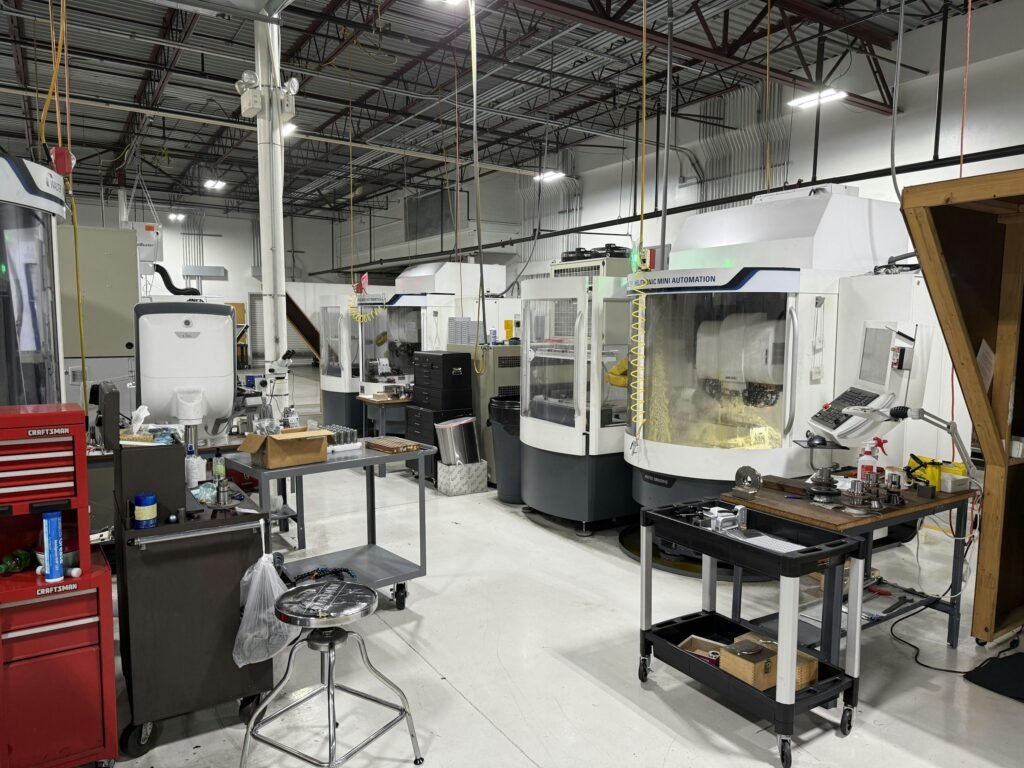
For companies planning capital expenditure, the window until 31 December 2027 is important. It coincides with the last years of the 15% corporate income tax rate before the stepwise reduction from 2028, so deductions claimed now are worth more than deductions claimed later. This article explains how the rules work, which assets qualify and how to plan the timing of investments.
How declining balance depreciation works
Under the straight-line method in § 7(1) EStG, the acquisition or production costs are spread evenly over the asset's useful life, based on the official depreciation tables. Under the declining-balance method in § 7(2) EStG, a fixed percentage is applied to the remaining book value each year. The percentage may not exceed three times the straight-line rate and may not exceed 30%. Because the base shrinks each year, the deductions are highest at the beginning and decrease over time.
| Useful life | Straight-line rate | Maximum declining-balance rate | Year 1 deduction on EUR 100,000 (full year) |
|---|---|---|---|
| 3 years | 33.33% | 30% (cap) | Straight-line remains higher: EUR 33,333 |
| 5 years | 20% | 30% (cap) | EUR 30,000 vs EUR 20,000 |
| 10 years | 10% | 30% | EUR 30,000 vs EUR 10,000 |
| 15 years | 6.67% | 20% | EUR 20,000 vs EUR 6,667 |
| 20 years | 5% | 15% | EUR 15,000 vs EUR 5,000 |
The table shows that declining balance depreciation is most attractive for assets with useful lives of around ten years or more, such as production machinery, plant and technical equipment. For short-lived assets, the 30% cap means that straight-line depreciation can be faster. In the year of acquisition, depreciation is calculated pro rata temporis by month, as under the straight-line method.
Taxpayers may switch from declining-balance to straight-line depreciation at any time, after which the remaining book value is spread over the remaining useful life (§ 7(3) EStG). Switching is typically beneficial once the straight-line amount on the remaining value exceeds the declining-balance amount. A switch in the opposite direction is not permitted. While declining-balance depreciation is used, extraordinary write-downs for unusual technical or economic wear are excluded (§ 7(2) sentence 4 EStG), although write-downs to a lower going-concern value under § 6 EStG remain possible where their conditions are met.
Which assets qualify
The rule applies to movable assets of fixed assets (bewegliche Wirtschaftsgüter des Anlagevermögens). This covers machinery, plant, vehicles, IT hardware, office equipment, tools and similar tangible assets that are used in the business for more than one year. It does not cover buildings and other immovable assets, intangible assets such as software licences and patents, or current assets held for sale. Leased assets are eligible for the party to whom they are attributed for tax purposes, typically the lessor under standard leasing arrangements.
The decisive date is the date of acquisition or production. An asset is acquired when the buyer obtains economic ownership, usually on delivery, and produced when production is completed. Orders placed before 1 July 2025 but delivered later qualify; assets delivered on or after 1 January 2028 do not, even if ordered earlier. For self-constructed plants with long build times, the completion date must fall within the window.
For large projects planned for late 2027, build delivery and completion dates into contracts with suppliers, including the transfer of risk and acceptance, so that economic ownership passes before 1 January 2028. A delivery slipping into January 2028 means losing the declining-balance option for that asset.
Electric vehicles: 75% in the first year
For electric vehicles within the meaning of the Motor Vehicle Tax Act that belong to fixed assets and are acquired after 30 June 2025 and before 1 January 2028, § 7(2a) EStG permits a special depreciation schedule: 75% of the acquisition costs in the year of acquisition, 10% in the following year, 5% in each of the second and third following years, 3% in the fourth and 2% in the fifth. The schedule applies only if no special depreciation has been claimed for the vehicle, and the 75% is available for the full year regardless of the month of acquisition.
This schedule complements other incentives for electric company cars. For private use of company electric vehicles without CO2 emissions and with a gross list price of no more than EUR 100,000, acquired between 2019 and the end of 2030, only a quarter of the list price is taken as the basis for the taxable benefit (§ 6(1) no. 4 sentence 2 no. 3 EStG), which in practice means a monthly benefit of 0.25% of the list price under the 1% method. Fleet managers can combine both effects: rapid depreciation at company level and a low taxable benefit for employees.
Interaction with other incentives
Declining balance depreciation is not the only acceleration tool. Small and medium-sized businesses whose profit did not exceed EUR 200,000 in the preceding year can claim an investment deduction of up to 50% of expected acquisition costs before the investment (§ 7g(1) EStG), and special depreciation of up to 40% in the year of acquisition and the following four years (§ 7g(5) and (6) EStG). Special depreciation under § 7g can be claimed in addition to straight-line or declining-balance depreciation, subject to the conditions of the provision. Low-value assets can be expensed immediately or pooled under separate rules.
Research and development investments may benefit from the research allowance under the Research Allowance Act, and from the treatment of development costs. Combining these instruments requires careful modelling, because some exclude each other for the same asset, and the optimal mix depends on the company's expected profits in each year of the phase-in period.
Timing investments around the rate cut
The investment window runs parallel to the last years of the 15% corporate income tax rate. From 2028, the rate falls by one percentage point per year to 10% in 2032, as explained in our article on the corporate tax rate cut. A deduction claimed in 2026 or 2027 reduces corporate income tax at 15%, while the same deduction in 2032 would reduce it at only 10%. Front-loading depreciation therefore delivers a permanent saving, not just a timing benefit. Trade tax, which is not affected by the corporate rate cut, benefits from earlier deductions in present value terms.
Illustration: a manufacturer acquires a production line for EUR 2 million in January 2027 with a useful life of 10 years. Straight-line depreciation would give EUR 200,000 per year. Declining balance depreciation at 30% gives EUR 600,000 in 2027, EUR 420,000 in 2028 and EUR 294,000 in 2029. At a combined tax rate of about 30% in 2027 and about 28.8% in 2028, the additional deductions in 2027 to 2029 reduce tax by more than EUR 200,000 compared with the straight-line method, and part of the benefit is permanent because later years carry lower rates.
Declining balance depreciation in practice: common questions
Used assets and group transfers
The statute does not require assets to be new. Used machinery acquired from a third party within the window qualifies, with a useful life based on the remaining expected use. Transfers within a group are more delicate: an asset sold by one group company to another at book value or fair value is acquired by the buyer and can in principle qualify, but the tax authorities may examine whether the transaction has a commercial purpose beyond generating a new depreciation base. Contributions in kind and reorganisations under the Reorganisation Tax Act often continue the transferor's depreciation method rather than creating a new acquisition.
Partnerships and sole proprietors
The rule applies to all businesses that determine profit by balance sheet or cash accounting, including partnerships and sole proprietors. For them, the benefit depends on the personal income tax rate of the partners and on the trade tax credit, and it can be combined with the retention rate under § 34a EStG. Partners in loss-making years should check whether the higher depreciation can be used or whether it merely increases losses subject to restrictions.
Trade tax add-backs and leasing
Where businesses lease rather than buy, the lessee cannot claim depreciation; instead, a fifth of lease payments for movable assets is added back for trade tax purposes, subject to the allowance of EUR 200,000 for total add-backs. Comparing purchase with declining balance depreciation against leasing is therefore worthwhile for larger investments, especially in the window up to the end of 2027.
Accounting and compliance points
The declining-balance option is a tax election. It can be exercised independently of the method used in the commercial balance sheet, but where tax and commercial depreciation differ, the assets must be recorded in a special register and deferred taxes may arise. Companies preparing IFRS accounts will usually keep straight-line depreciation there, so the tax effect appears as a temporary difference.
The method is chosen for each asset and should be documented in the fixed-asset register, together with the useful life, the rate applied and the planned switch to straight-line. Tax auditors regularly check whether useful lives correspond to the official tables, because an artificially long useful life would allow a higher declining-balance rate while a short one would increase straight-line depreciation. Our article on handling a German tax audit covers the audit process.
How TRW & Co helps with declining balance depreciation
We advise businesses and investors on structuring and timing investments to use declining balance depreciation and related incentives: reviewing supply and construction contracts for acquisition dates, modelling the combined effect with the corporate tax rate cut and trade tax, and coordinating with leasing and financing structures. We also advise on electric vehicle fleets, company car policies and research allowances, and represent clients in tax audits and disputes. For more on our tax practice, see tax and private clients, or contact us. This article provides general information and is not tax or legal advice.
Frequently asked questions
Which assets qualify for declining-balance depreciation?
Movable assets of fixed assets, such as machinery, plant, vehicles and IT hardware, acquired or produced after 30 June 2025 and before 1 January 2028. Buildings, intangible assets like software licences and assets held for sale do not qualify. The asset must be acquired, meaning economic ownership has passed, or completed within the window.
What is the maximum declining-balance rate?
Up to three times the straight-line rate for the asset’s useful life, but no more than 30% of the remaining book value per year (§ 7(2) EStG). For an asset with a ten-year life, the rate is 30%; for a twenty-year life, it is 15%. For short-lived assets the straight-line method may be faster.
Can a company switch back to straight-line depreciation?
Yes. Under § 7(3) EStG, a switch from declining-balance to straight-line depreciation is permitted, after which the remaining book value is spread over the remaining useful life. A switch from straight-line to declining-balance is not allowed. The optimal switching point can be calculated in advance.
How are electric vehicles treated?
Electric vehicles acquired after 30 June 2025 and before 1 January 2028 and held as fixed assets can be depreciated by 75% in the year of acquisition, then 10%, 5%, 5%, 3% and 2% in the following years (§ 7(2a) EStG), provided no special depreciation is claimed for the vehicle.
Does declining-balance depreciation also reduce trade tax?
Yes. Depreciation reduces the profit from which trade income is derived, so the benefit applies to income or corporate income tax and to trade tax. While trade tax rates are not falling, earlier deductions still improve cash flow and present value.
Sources
General information only, not legal advice. References to statutes, courts and authorities describe published law and practice at the date shown.
 Tax & Private Wealth
Property Tax Reform for Owners and Investors
The property tax reform has applied in Germany since 1 January 2025, with new values determined as at 1 January 2022 and different models in different… 8 min read
 Tax & Private Wealth
Taxation of Crypto Assets in Germany
The taxation of crypto assets in Germany turns on who holds them: private investors pay income tax on gains only if they sell or exchange within… 8 min read
 Tax & Private Wealth
Family Office Structuring in Germany
Family office structuring in Germany combines corporate, regulatory, tax and governance decisions. Single family offices serving only group companies can rely on the group exemption in… 8 min read