
Anti-Counterfeiting and Customs Border Measures
An effective anti counterfeiting strategy in Germany combines customs border measures under Regulation (EU) No 608/2013 with online notice-and-action and civil and criminal enforcement. Customs applications are free, detained goods can be destroyed in a simplified procedure within ten working days, and small parcels can be destroyed without the rightholder’s active involvement.

Key takeaways
- Applications for customs action under Regulation 608/2013 are free of charge.
- Customs decide on applications within 30 working days; protection lasts up to one year, extendable.
- Rightholders must confirm infringement and consent to destruction within 10 working days.
- Small consignments of up to three units or under 2 kg can be destroyed in a simplified procedure.
- The DSA gives brand owners notice-and-action tools and trusted flagger status against online counterfeits.
Anti counterfeiting in Germany: customs as the first line of defence
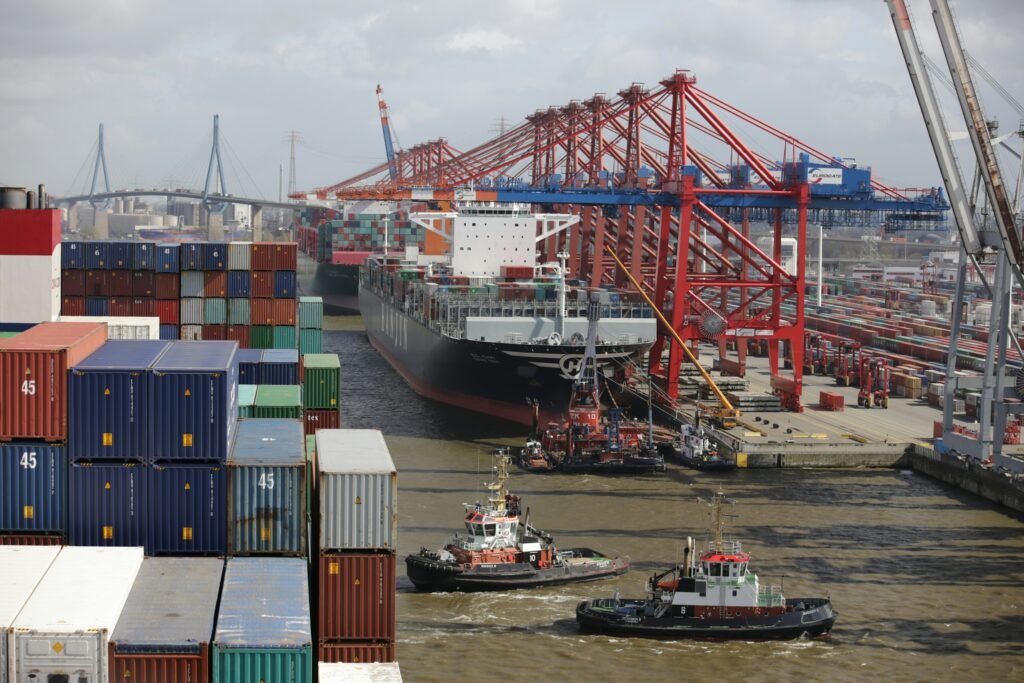
Counterfeit goods reach German and EU consumers mainly through imports — in containers, by air freight and, increasingly, in small parcels ordered from online marketplaces. An effective anti counterfeiting strategy therefore starts at the border. Under Regulation (EU) No 608/2013 on customs enforcement of intellectual property rights, rightholders can apply to customs to detain goods suspected of infringing trade marks, designs, copyright, patents, geographical indications and other rights, and to have them destroyed in a simplified procedure. In Germany, applications are handled centrally by the customs administration's central office for intellectual property enforcement in Munich.
National seizure procedures under the Trade Mark Act and other IP statutes complement the EU regime, and civil and criminal enforcement deals with counterfeits already on the market.
For brand owners, customs measures are cost-effective: the application itself is free of charge (Article 8 of the Regulation), customs act on their own risk analysis and on the rightholder's information, and most detained counterfeits are destroyed without court proceedings. The key to success is the quality of the application and the speed of the rightholder's response when customs notify a detention. Brand owners that invest in both typically see a much higher share of counterfeits stopped before they reach distributors, warehouses or consumers.
The application for action
Rightholders file an application for action (AFA) with the competent customs department — a national application covering Germany or a Union application covering several Member States where the right is an EU-wide right such as an EU trade mark or registered Community design. The application should contain:
- the rights to be protected, with registration details;
- detailed product information enabling customs to distinguish originals from counterfeits — packaging, labels, serial numbers, security features, authorised manufacturers, distribution channels and typical routes;
- contact persons available to respond within short deadlines;
- a request for the small consignments procedure, if desired.
Customs must decide on the application within 30 working days (Article 9(1)). The period of action may not exceed one year and can be extended on request (Article 11). Rightholders must keep the application up to date — outdated product information is a frequent reason for missed seizures. New product lines, packaging changes, additional authorised manufacturers and new distribution routes should be notified promptly, and the rightholder should inform customs if a right lapses or is transferred, since the application depends on the underlying right remaining valid.
What happens when customs detain goods
When customs suspect an infringement, they suspend the release or detain the goods and notify both the declarant or holder of the goods and the holder of the decision, who may receive information about the consignment and samples. The simplified destruction procedure under Article 23 then runs on short deadlines:
| Step | Deadline | Article of Regulation 608/2013 |
|---|---|---|
| Rightholder confirms infringement and agrees to destruction | 10 working days (3 for perishable goods) from notification | Art. 23(1)(a), (b) |
| Declarant or holder agrees to destruction, or is deemed to agree if it does not object | 10 working days (3 for perishable goods) | Art. 23(1)(c) |
| If the holder objects, rightholder initiates proceedings to determine infringement | 10 working days (3 for perishable goods) from notification | Art. 23(3) |
| Small consignments (postal or courier, up to three units or under 2 kg) | Destruction without rightholder's involvement unless holder objects | Art. 26 |
| Application decision by customs | 30 working days | Art. 9(1) |
| Period of action | Up to one year, extendable | Art. 11 |
If the declarant or holder neither agrees nor objects, consent is deemed given, and the goods are destroyed under customs control at the rightholder's expense. If the holder objects, the rightholder must start court proceedings within the deadline; otherwise the goods are released. The small consignments procedure, defined by reference to postal and express courier shipments containing three units or fewer or weighing less than two kilograms, allows destruction without the rightholder's active involvement — an important tool for e-commerce counterfeits, which the rightholder must request in the application.
Set up an internal process for customs notifications: a named team, template confirmations, authority to agree to destruction and a budget for storage and destruction costs. Missing a ten-working-day deadline means counterfeits are released.
National seizure and goods in transit
Where the EU Regulation does not apply — notably for goods moving within the EU single market — national provisions allow customs seizure on application and against security if the infringement is obvious, for example § 146 of the Trade Mark Act (Markengesetz, MarkenG). Goods in transit through the EU raise special issues: under EU trade mark law, rightholders can stop counterfeit goods in transit if the trade mark is identical or indistinguishable, unless the declarant proves that the rightholder has no right in the country of final destination.
Online marketplaces and notice-and-action
Online sales channels require a different anti counterfeiting toolkit.
The Digital Services Act requires hosting services and online platforms to operate notice-and-action mechanisms and to process notices of illegal content — including listings for counterfeit goods — in a timely, diligent and objective manner. Online marketplaces must also obtain and verify information about traders (know-your-business-customer duties) and design their interfaces so that traders can comply with consumer law. Rightholders can use these mechanisms and brand protection programmes offered by the platforms to remove listings at scale, and can apply for trusted flagger status through the Digital Services Coordinator, which gives their notices priority. See our insight on the DSA in Germany.
Platforms that do not act on clear notices may themselves be liable as "interferers" (Störer) under German law or under the CJEU's case law on active platform roles. Repeat infringers should be addressed with account-level measures, and information claims can help identify the people behind anonymous shops.
Evidence: test purchases and product examination
Every enforcement step depends on evidence that the goods are counterfeit. Rightholders should maintain an internal authentication guide describing genuine products, security features, batch codes and packaging, and keep reference samples. Test purchases from online shops — documented with screenshots, order confirmations, payment records and photographs of the delivered product — are the standard method to prove offers and sales. Expert declarations by the rightholder's product specialists usually suffice in preliminary proceedings, provided they explain concretely why the product is not genuine. Where products are technical, forensic laboratory analysis may be needed.
Safety risks and regulatory routes
Counterfeit toys, cosmetics, spare parts, electrical goods and medicines often present safety risks. Besides IP enforcement, rightholders and authorities can use product safety law: under the General Product Safety Regulation, online marketplaces must cooperate with market surveillance authorities and act on orders to remove dangerous products, and authorities can take action against economic operators. Reporting dangerous counterfeits to market surveillance authorities and customs can lead to faster removal than IP claims alone and strengthens a rightholder's anti counterfeiting position. See our insight on the General Product Safety Regulation.
Costs and recovery
Customs storage and destruction costs fall initially on the rightholder, which can claim them back from the infringer. In civil proceedings, the losing party bears the statutory costs, including the rightholder's lawyers' fees under the statutory scale, and the rightholder can claim damages calculated on lost profits, the infringer's profits or a reasonable licence fee. In practice, recovery from anonymous online sellers or insolvent importers is often difficult, so anti counterfeiting budgets should focus on prevention and on targets where enforcement creates lasting deterrence — manufacturers, major distributors and repeat sellers.
Civil and criminal enforcement
Counterfeits already in the market are tackled through civil claims for injunction, information about origin and distribution channels, recall, destruction and damages — under the Trade Mark Act, the Design Act and other IP statutes, implementing the EU Enforcement Directive. Preliminary injunctions are available quickly where urgency is shown. Commercial trade mark counterfeiting is also a criminal offence (§ 143 MarkenG), and prosecutors can search premises and seize goods. Criminal proceedings are particularly useful against organised distribution networks, because prosecutors can trace payment flows and identify the people behind front companies. Rightholders can join criminal proceedings and use the results of investigations in their civil claims.
Building an anti counterfeiting programme
- Register the right rights: EU and national trade marks and designs, covering relevant classes and product appearances; consider registered geographical indications where applicable.
- File customs applications: national and Union applications with detailed, current product information.
- Train customs officers: product identification workshops and clear authentication guides increase detection rates at ports, airports and postal centres.
- Monitor online channels: marketplaces, social media shops, messaging channels and domain names, using automated tools where volumes are high.
- Secure supply chains: control over authorised manufacturers, overruns and component suppliers; contractual audit rights.
- Enforce consistently: prioritise sources and repeat offenders; coordinate with customs and prosecutors.
- Measure results: track seizures, takedowns and enforcement costs to adjust the strategy.
Grey goods and parallel imports
Not every unauthorised product is a counterfeit. Genuine goods first placed on the market outside the European Economic Area without the rightholder's consent (parallel imports) can be stopped under trade mark law, because exhaustion applies only to goods put on the market in the EEA by the rightholder or with its consent. Customs measures under the Regulation do not cover parallel trade and overruns in the same way as counterfeits, so civil claims are usually needed. See our insight on selective distribution and online sales.
Cooperation with authorities and across borders
Enforcement works best when rightholders cooperate actively with customs and police. German customs offices value product training, quick responses and consistent contact persons. Information about known counterfeit routes, manufacturers and sellers can be shared through the customs application and through direct contacts, within the limits of data protection law. At EU level, the EU Intellectual Property Office provides an enforcement portal through which rightholders can share product information with customs and police authorities across Member States and file Union applications electronically.
Counterfeiting is international. Many counterfeit goods are produced outside the EU, transit through hubs and are sold online across borders. A German anti counterfeiting strategy should therefore be part of a wider programme that covers production countries, logistics hubs and marketplaces worldwide, with consistent registrations, monitoring and enforcement priorities. Coordinating action in several countries — for example, simultaneous seizures and platform takedowns — reduces the risk that counterfeiters simply shift routes.
How TRW & Co helps with anti counterfeiting
We advise brand owners on building anti counterfeiting programmes in Germany and the EU: drafting and maintaining customs applications, managing detention notifications and destruction procedures, bringing civil actions and preliminary injunctions, working with prosecutors in criminal cases, and organising online notice-and-action and trusted flagger strategies. We also advise on supply-chain contracts and on distinguishing counterfeits from parallel imports. See our page on trademarks and designs or contact us.
Frequently asked questions
How do I stop counterfeits at the German border?
File an application for action with customs under Regulation (EU) No 608/2013, either nationally for Germany or as a Union application for EU-wide rights. Provide detailed product information to help customs identify counterfeits. When goods are detained, confirm the infringement and consent to destruction within ten working days; if the holder does not object, the goods are destroyed.
What does a customs application cost?
The application itself is free of charge (Article 8 of the Regulation). Rightholders bear costs for storage and destruction of detained goods and for any court proceedings, and must provide an undertaking to that effect. In practice, the main investment lies in preparing product information, training customs officers and responding to notifications within the deadlines.
What is the small consignments procedure?
It is a simplified procedure for postal and express courier shipments containing three units or fewer or weighing less than two kilograms. If requested in the application, customs can destroy suspected counterfeits in such consignments without the rightholder’s active involvement, unless the holder of the goods objects. It is particularly useful against e-commerce counterfeits.
What if the importer objects to destruction?
If the declarant or holder objects within the deadline, customs notify the rightholder, who must initiate proceedings to determine whether an IP right has been infringed within ten working days (three for perishable goods). If no proceedings are started, the goods are released. Civil courts can then order destruction and damages.
Can customs stop parallel imports?
Customs border measures focus on counterfeit and pirated goods. Genuine goods first marketed outside the EEA without consent can infringe trade mark rights, but they are usually addressed through civil claims rather than the simplified destruction procedure. Rightholders should consult on the specific situation, including whether goods are overruns or diverted products.
Sources
General information only, not legal advice. References to statutes, courts and authorities describe published law and practice at the date shown.
 IP & Patents
Open Source Compliance
Open source compliance protects companies from copyright claims and security risks. Licences impose obligations from attribution to source code disclosure, German courts enforce licence conditions, and… 8 min read
 IP & Patents
Trademark Clearance and Opposition
Trademark clearance before launching a brand avoids costly rebrands and disputes. This guide explains how to search and assess earlier rights in Germany and the EU,… 8 min read
 IP & Patents
Unfair Competition Law (UWG) Basics
Unfair competition law in Germany is enforced mainly by competitors and associations through warning letters and fast preliminary injunctions. This guide explains the UWG’s main prohibitions… 8 min read